Dry eye and hormonal changes: adolescence, pregnancy and menopause
03/09/2026
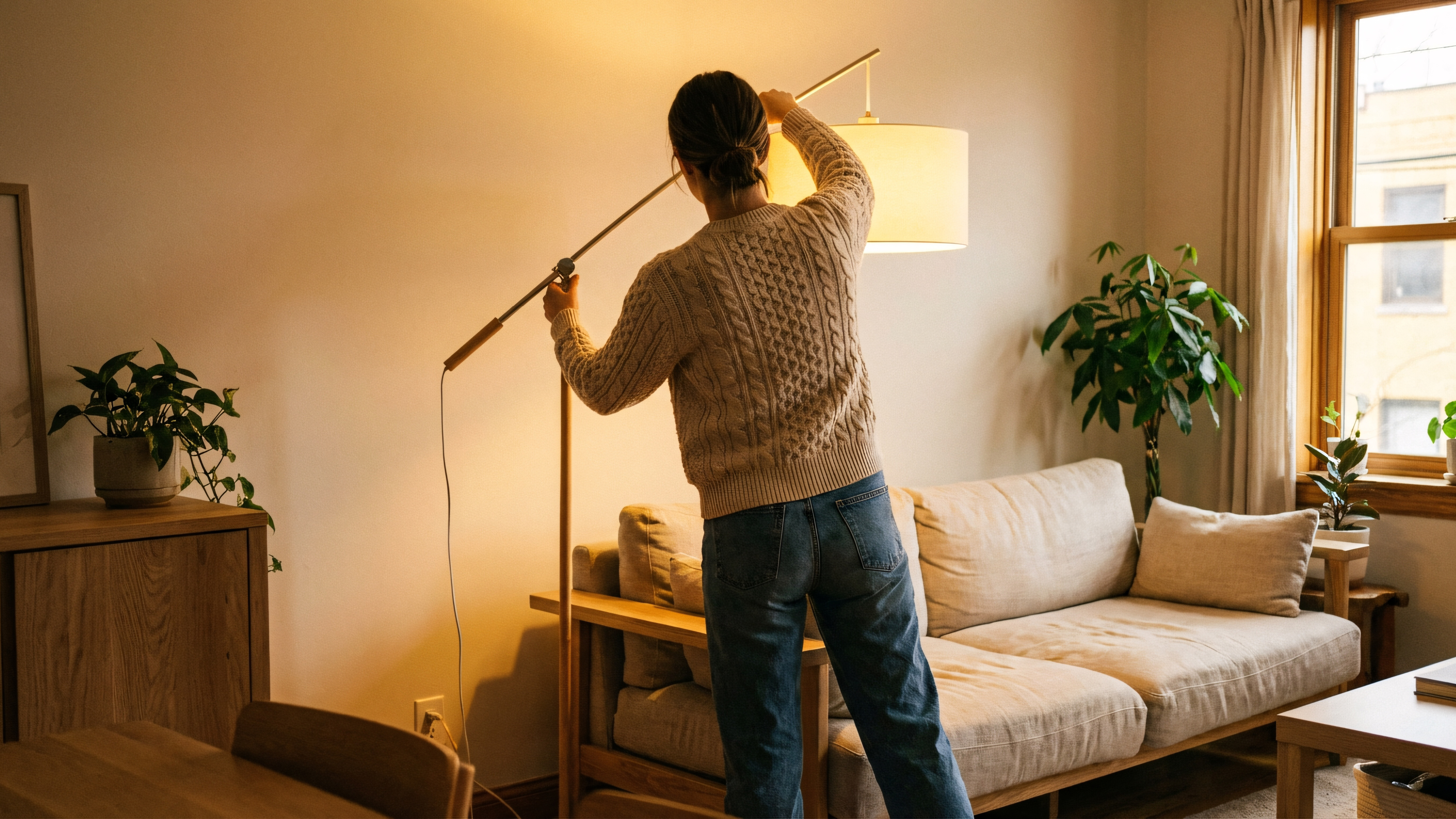

Age-related macular degeneration (AMD) is one of the leading causes of low vision in people over the age of 60. When the macula —the central area of the retina responsible for fine detail— deteriorates, everyday tasks such as reading, cooking or recognising faces become challenging.
In this context, something as simple as improving lighting at home can make a real difference to independence and quality of life.
Low vision associated with AMD does not mean total blindness. Peripheral vision is preserved, but central visual sharpness is lost. It is like trying to read while looking through a blurred patch in the centre of the visual field.
Light plays a fundamental role because it:
Improves contrast.
Reduces shadows that make perception more difficult.
Makes reading and precision tasks easier.
Reduces visual fatigue.
At the Barraquer Ophthalmology Centre, we understand that AMD treatment does not end in the consulting room. Adapting the environment is an essential part of the patient’s comprehensive care.
Small adjustments can transform everyday life. It is not simply a matter of “adding more light”, but of positioning it strategically.
People with AMD may need two to three times more light than someone with good vision to carry out the same task.
Recommendations:
Replace traditional light bulbs with high-output LED bulbs.
Prioritise neutral white light (4,000–5,000 K).
Avoid yellowish light, which reduces contrast.
A well-positioned lamp can be more effective than a powerful ceiling light.
Practical examples:
Adjustable arm lamps for reading.
Direct lighting over kitchen worktops.
Focused lighting above the bathroom mirror.
| Strategy | Visual benefit |
|---|---|
| Direct light on the book | Improves contrast and sharpness |
| Under-cabinet kitchen lighting | Reduces shadows in the work area |
| Adjustable lamps | Allow the light to be adapted according to individual needs |
Glare can be particularly uncomfortable for people with AMD.
To reduce it:
Use lampshades or diffusers.
Avoid shiny surfaces.
Fit translucent curtains to filter direct sunlight.
Excessive brightness can be just as harmful as insufficient light.
Lighting works best when combined with visual contrast.
Examples:
Dark light switches on pale walls.
White crockery on dark tablecloths.
Clearly marked edges on steps.
AMD does not only affect reading. It also increases the risk of falls. Appropriate lighting can help reduce accidents at night, improve spatial orientation and increase patients’ confidence in their surroundings. Although good lighting is important in every room, particular attention should be paid to higher-risk areas such as corridors, stairs, bathrooms and bedrooms.
Improving lighting at home helps patients make better use of their remaining vision, but it does not stop the disease from progressing.
Ophthalmological follow-up and, when indicated, medical treatment are essential, particularly in wet AMD, where intravitreal injections can help control disease activity and preserve vision.
In practice, management usually combines several measures:
Imaging tests such as OCT to assess the retina and monitor changes.
Treatments according to the type of AMD and its progression.
Low-vision rehabilitation to improve visual performance in everyday tasks.
Recommendations for adapting the environment, such as adjusting lighting and contrast at home.
Dr Santiago Abengoechea, ophthalmologist at the Barraquer Ophthalmology Centre
La degeneración macular asociada a la edad, conocida también por sus siglas ‘DMAE’, es una enfermedad degenerativa de la mácula que provoca una disminución progresiva de la visión central. La mácula es un área pequeña localizada en el centro de la retina, la capa posterior del ojo que transforma la luz y las imágenes que entran en el ojo en señales nerviosas que son enviadas al cerebro. Actualmente, es la causa más frecuente de disminución severa de la visión en el mundo occidental. En España afecta aproximadamente al 13% de las personas mayores de 65 años. Hablamos con la doctora Sònia Viver, oftalmóloga de Barraquer, para resolver las principales dudas sobre esta patología.