Key points to distinguish between retinal detachment and vitreous detachment
23/10/2026
03/03/2026
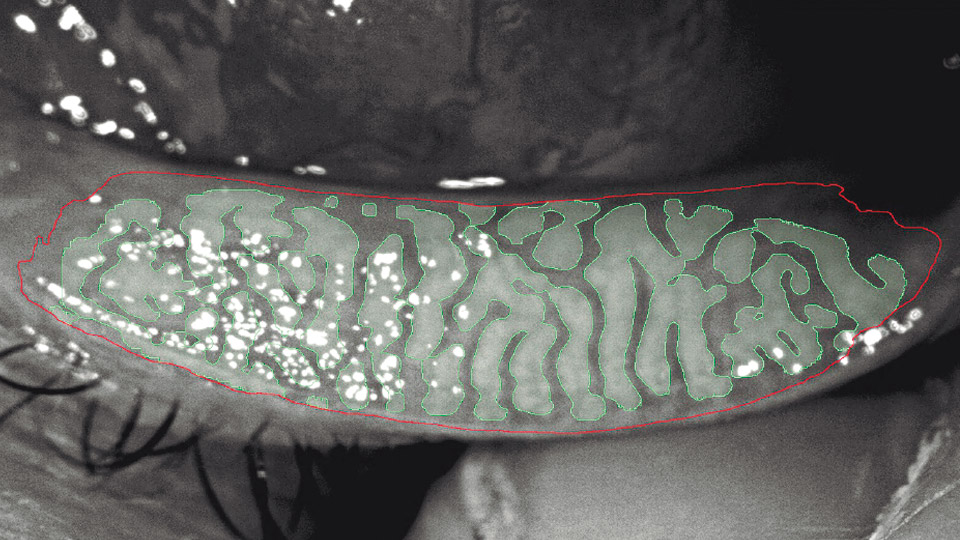
Meibography is a non-invasive imaging test designed to visualise the Meibomian glands with precision, structures located in the upper and lower eyelids. These glands produce the lipid layer of the tear film, which is essential for preventing rapid evaporation and maintaining a stable ocular surface. When they become altered, tear quality decreases and discomfort appears, which may be confused with visual fatigue or allergies. Meibography allows direct observation of whether these glands are healthy, shortened, dilated or absent, providing information that previously could only be suspected.
Carrying out the examination is simple, quick and completely painless. The patient sits in front of equipment fitted with infrared illumination and a specialised camera. The professional gently everts the eyelid while the device captures high-resolution images of the glandular pattern. No drops are applied and no prior preparation is required; it is sufficient to keep the gaze fixed for a few seconds. Within a few minutes, the specialist has a detailed map of the condition of the glands, which facilitates objective analysis and allows results to be compared in later follow-up visits.
This test is particularly indicated for patients with dry eye, as dysfunction of the Meibomian glands is one of its most frequent causes. It is also useful in cases of chronic blepharitis, contact lens intolerance, ocular rosacea and symptoms such as stinging, fluctuating vision or a gritty sensation. It also helps in planning thermal treatments, intense pulsed light or specific eyelid hygiene, and allows their effectiveness to be evaluated over time. Thanks to meibography, it is possible to establish more precise diagnoses and personalised treatments, significantly improving patients’ ocular comfort.
Olga Riera, Department of Ocular Biometry
El ojo seco es una patología crónica que consiste en la escasez de la cantidad de lágrima y/o en el deterioro de la calidad de la misma produciendo una inflamación de la superficie del ojo. Las lágrimas son esenciales para mantener la superficie del ojo lubricada, proporcionarle nutrientes y protegerlo contra infecciones. En este capítulo hablamos con el doctor Rubén Delgado sobre algunas cuestiones básicas sobre el ojo seco y los tratamientos que ofrecemos en Barraquer.