Key points to distinguish between retinal detachment and vitreous detachment
23/10/2026
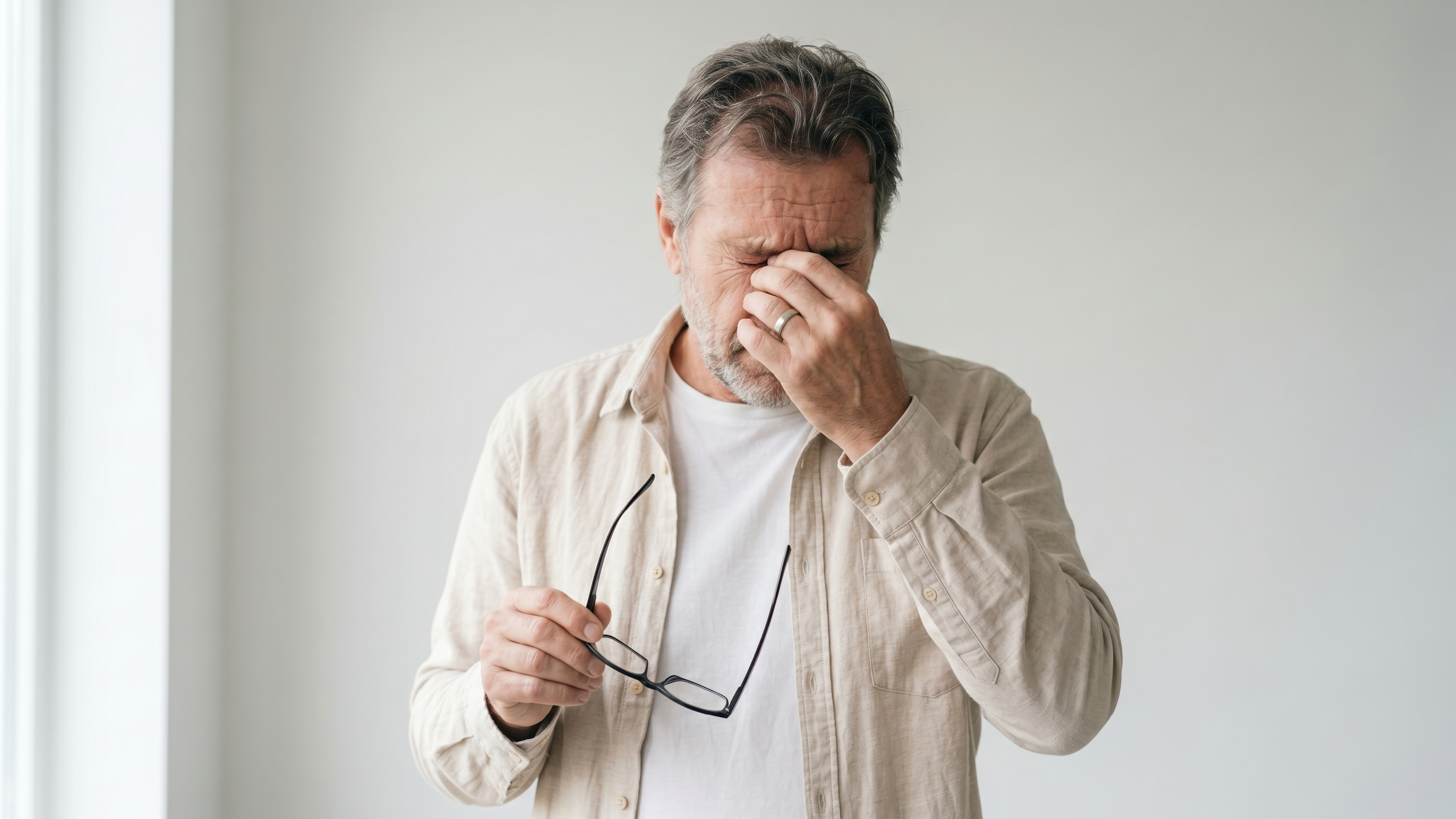

Dry eye syndrome is a common disease of the ocular surface that can be influenced by multiple factors. Beyond environmental factors or age, the relationship between sustained stress, eye strain and tear film dysfunction is increasingly being recognised.
Many patients report that their eye discomfort worsens during periods of greater emotional tension or mental overload. This association is not coincidental.
Dry eye is not simply a matter of “not having enough tears”. It is a complex disorder involving:
Inflammation plays a central role, and stress can modulate this inflammatory response.
Sustained stress activates the sympathetic nervous system and the hormonal stress axis. Prolonged activation can contribute to:
The result is a more reactive and vulnerable ocular surface.
In predisposed individuals, stress is not always the initial cause, but it can clearly be an aggravating factor.
Eye strain is not just a matter of optics. Prolonged concentration on precision tasks or mental overload can lead to:
Blinking is essential for distributing tears evenly. When blinking is reduced, the tear film becomes unstable and evaporation increases.
In many cases, a circular pattern develops:
Stress → less blinking and increased inflammation → dry eye symptoms → persistent discomfort → more worry and tension.
Breaking this cycle requires addressing both the ocular surface and the triggering factors.
Patients commonly report:
|
Symptom |
Possible mechanism |
|
Gritty sensation |
Tear film instability |
|
Stinging |
Superficial inflammation |
|
Heavy eyes |
Periocular muscle fatigue |
|
Intermittent blurred vision |
Irregular tear film |
|
Reflex tearing |
Surface irritation |
It is common for the discomfort to be more intense at the end of the day or during periods of high emotional demands.
The approach should be individualised.
In some cases, a specific examination of the ocular surface may be necessary to correctly classify the type of dry eye.
Specialist assessment is recommended if:
An accurate diagnosis makes it possible to distinguish between evaporative dry eye, aqueous-deficient dry eye or mixed forms, and to adjust treatment accordingly.
In conclusion, stress and eye strain can affect tear film stability and worsen dry eye syndrome. Understanding this relationship allows for a more comprehensive approach, addressing not only the ocular surface but also the factors that influence it.
Dr Rubén Delgado, ophthalmologist at Barraquer Ophthalmology Centre
El ojo seco es una patología crónica que consiste en la escasez de la cantidad de lágrima y/o en el deterioro de la calidad de la misma produciendo una inflamación de la superficie del ojo. Las lágrimas son esenciales para mantener la superficie del ojo lubricada, proporcionarle nutrientes y protegerlo contra infecciones. En este capítulo hablamos con el doctor Rubén Delgado sobre algunas cuestiones básicas sobre el ojo seco y los tratamientos que ofrecemos en Barraquer.