When do we perform a fundus examination?
06/10/2026
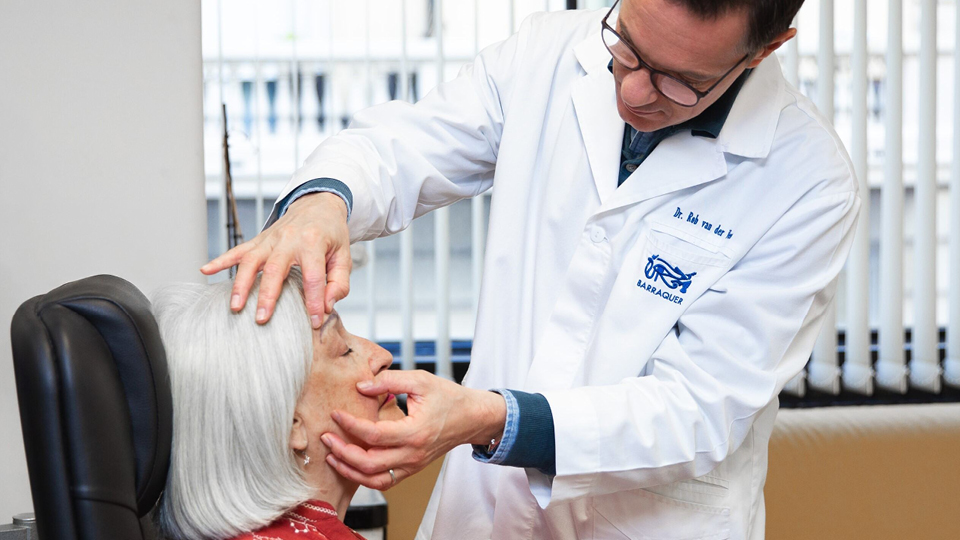

When people speak of a “droopy eyelid,” they generally refer to the upper eyelid skin resting in a way that partially covers the eyelashes. This can create a feeling of heaviness, reduce the visual field, or simply be considered unaesthetic.
However, in many cases what is actually present is upper eyelid ptosis—that is, the eyelid has descended and its margin sits too low, which can give a sleepy or distracted appearance and, in some cases, significantly affect the visual field.
It is important to distinguish between ptosis (drooping of the eyelid elevator muscle) and dermatochalasis (excess skin). Both can coexist and require different approaches.
The most common cause of ptosis is aging (an involutional process), although contact lens use is also frequent. There are also less common causes such as eyelid lesions due to tumors, scars, or neurological or muscular diseases.
Progressive degeneration of the elevator muscle is common from the age of 50 onwards.
Especially in soft lens wearers, due to repeated mechanical traction.
Traumatic injuries, tumors, myasthenia gravis, or congenital ptosis.
Since in most cases ptosis is due to aging, prolonged contact lens use, or is congenital, the usual solution is surgical. In mild cases of micro-ptosis, treatment with botulinum toxins may be considered, although its effects are temporary.
The surgical approach varies according to each patient’s characteristics. Below are the techniques most commonly used in our current practice:
If one or both eyelids are only slightly drooped, correction can often be achieved through an internal approach. This means the procedure is performed from the inside of the eyelid, without the need for a skin incision. Under local anesthesia, a small amount of tissue is removed from the inner eyelid; if sutures are used, they are removed after approximately one week.
Nowadays, especially when ptosis correction is combined with blepharoplasty to remove excess upper eyelid skin, surgery is often performed without sutures, which reduces operative time and avoids possible corneal irritation, although the final effect may appear somewhat more gradually.
In more pronounced ptosis, it is necessary to operate on the upper eyelid elevator muscle. During this procedure, both the muscle and its tendon are folded and repositioned in their original location, correcting the drooping eyelid.
This procedure can also be performed using a posterior approach, known as “white line advancement” or “posterior levator reinsertion,” which is particularly suitable in young patients with good muscle function and when excess skin removal is not required, thus avoiding external incisions.
For congenital ptosis, the first-line option is levator resection. In this case, the upper eyelid elevator muscle is operated on, shortened, and then reinserted.
If muscle function is insufficient and the child has difficulty properly using the eye (as it is partially covered by the eyelid), brow suspension surgery is performed to create a new connection and prevent the development of a lazy eye.
The key message is that any patient considering eyelid cosmetic surgery should seek professional advice to rule out underlying ptosis. If it is not identified and corrected during the initial procedure, the final result may not meet expectations.
At Barraquer, we understand the impact that eyelid drooping can have on quality of life and vision. For this reason, we offer personalized diagnosis and the most advanced surgical techniques to treat eyelid ptosis safely and effectively.
Dr. Rob Van der Veen, ophthalmologist at Barraquer Ophthalmology Centre