When do we perform a fundus examination?
06/10/2026
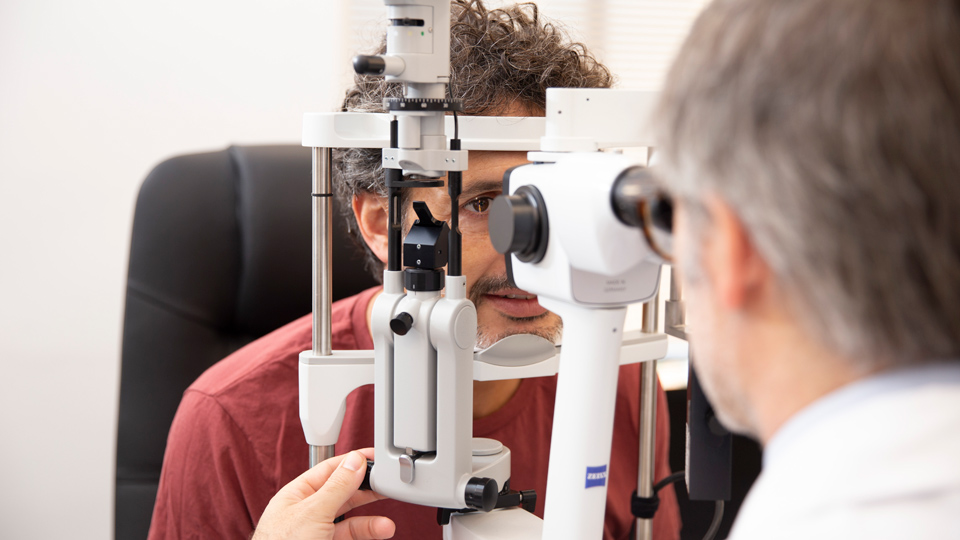

Presbyopia, is a visual condition associated with ageing that affects the ability to focus on near objects. It usually appears from the age of 40–45 and progresses over time, making everyday activities such as reading or using mobile devices more difficult. Fortunately, there are various options for correcting presbyopia, adapted to the needs and preferences of each patient.
Glasses are the most common and simplest option to correct presbyopia. There are different types:
These optical solutions allow for quick adaptation and are ideal for those looking for effective correction without invasive procedures.
For those who prefer to do without glasses, multifocal contact lenses are an excellent alternative. These lenses provide clear vision both near and far, adapting to the user’s visual needs. Another option is monovision, where one eye is corrected for distance vision and the other for near vision, requiring an adaptation period.
Surgery offers long-lasting correction of presbyopia, eliminating or reducing dependence on glasses or contact lenses. Among the surgical options, the following stand out:
These procedures are performed on an outpatient basis and offer a quick recovery, making them an attractive option for those seeking a definitive solution.
Choosing the most appropriate treatment depends on factors such as age, lifestyle, eye health and personal preferences. It is essential to consult a specialist ophthalmologist who can carry out a complete assessment and recommend the best option for correcting presbyopia.
At our centre, we offer a personalised approach for each patient, using cutting-edge technology and a highly qualified medical team. If you are experiencing symptoms of tired eyes, we invite you to book an appointment to explore the most suitable solutions for you.
Dr Andrés Picó, ophthalmologist at the Barraquer Ophthalmology Centre
Todos sufriremos la aparición de la presbicia o vista cansada a partir de los 40 años. Aunque su progresión suele resultar incómoda, actualmente disponemos de un amplio abanico terapéutico para que el paciente pueda afrontar esta etapa sin renunciar a su calidad de vida. ¿Qué es la presbicia? ¿Cómo es su tratamiento? ¿De verdad vale la pena operarse? Despejamos todas las dudas.