Eye care after surgery in children
14/10/2026
15/10/2026
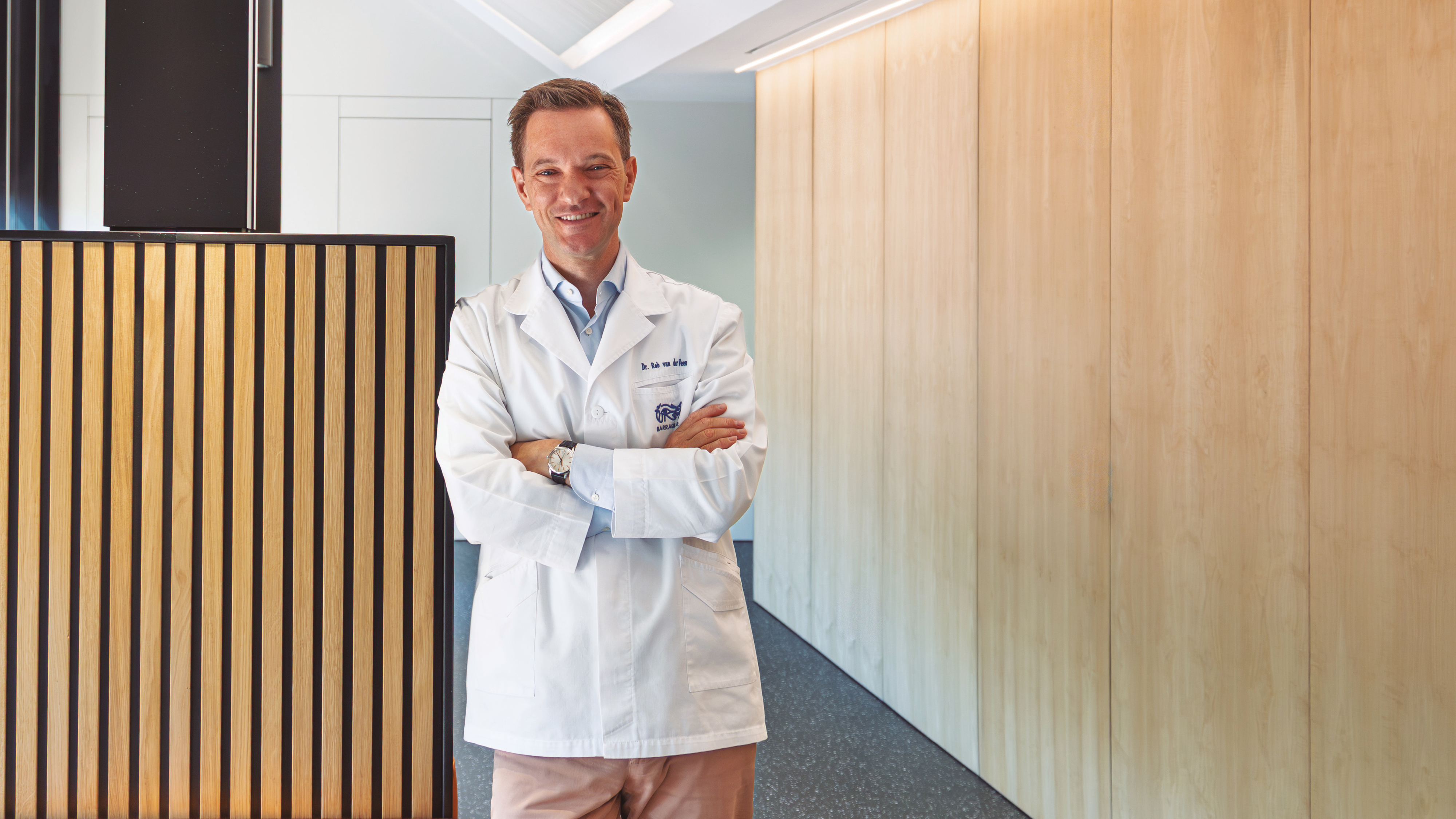
He graduated in Medicine from Maastricht University, where he also obtained his PhD, researching macular pigment through international collaboration. He specialised in Ophthalmology and completed a fellowship in Oculoplastic and Orbital Surgery in Amsterdam. He has more than 10 years of experience in oculoplastics, particularly in reconstructive and aesthetic surgery.
In 2023, he joined the Barraquer Ophthalmology Centre, focusing his work on eyelid tumours and their surgical reconstruction, orbital conditions, the lacrimal system and aesthetic oculoplastic surgery.
What led you to study Medicine and specialise in Ophthalmology?
So far, I am the first and only person in my family to have studied Medicine; it was not something my parents particularly encouraged. I initially studied Psychology for a year, a subject that interested me enormously, but I could not see myself practising it on a daily basis. I decided to study Medicine when I realised that I could explore in greater depth the subject that had fascinated me most in previous years: Biology. I always spent hours studying the human body and was fascinated by its complexity. I found the idea of studying it in greater depth very interesting, with the ultimate aim of helping those who might need that knowledge, who today are my dear patients.
During my medical studies, I completed several external placements, one of which was in Aruba, in the Caribbean, in the Dutch Antilles. It was there that my mentor inspired me so much in just three weeks that there was no turning back. He saw my enthusiasm when I sat behind the microscope and observed the intraocular structures as if they were a live, three-dimensional anatomy book. It is something very special, and only we, as ophthalmologists, have the privilege of seeing it day after day.
When he also allowed me to perform surgical manoeuvres during my placement, something normally reserved for second- or third-year residents, and I saw the difference we could make to a patient's life in just a few minutes, I made my decision.
Why did you choose to specialise in oculoplastic surgery?
When I returned from the Caribbean, I focused entirely on securing a residency position in Ophthalmology, and I accepted an opportunity to complete a doctoral thesis first, followed by my residency. Even during my research years, we attended clinical meetings, and one in particular stood out: the oculoplastics meeting with the Department of Pathology. During these sessions, our orbital surgery consultant discussed his operations and biopsies and showed his postoperative results. The rest is history.
After completing my residency, I secured a place on a master's programme in Oculoplastic and Orbital Surgery at the renowned Orbital Center Amsterdam, and since then I have devoted myself exclusively to this fantastic subspecialty.
How has your international experience influenced the way you work?
It has helped me enormously to broaden my perspective and learn how to practise medicine with all kinds of patients from very different backgrounds. We have a saying in Dutch that comes from the culinary world — which I also enjoy very much — that goes: “It is always good to look into other people's kitchens.”
The idea is that learning your profession in different countries, in several languages and alongside people from very diverse backgrounds can help you create your own “recipe” for developing the best plan for each patient.
What does your day-to-day work involve? What do you enjoy most about your profession?
My daily work is divided more or less equally between consultations and surgery, although there are periods when I spend more time operating than seeing patients. What I enjoy most about oculoplastics is that it combines science, skill and art.
Is there a particular clinical case that has had a lasting impact on you during your career?
The first patient with an incurable malignant disease whom we nevertheless had to operate on had a profound impact on me, and it is something I will never forget. On the other hand, I vividly remember my first aesthetic surgery patient, who was very pleased with the results of her blepharoplasty.
What exactly does oculoplastic surgery involve, and what types of conditions does it treat?
We essentially treat four groups of patients:
Blepharoplasty is a well-known procedure. When is it indicated for medical reasons and when for aesthetic reasons?
It is only considered functional — that is, medically indicated — when the skin of the upper eyelid partially obstructs the visual axis. All other cases are considered aesthetic, even if the patient experiences heaviness, eye fatigue or other symptoms that may lead them to perceive it differently. For the procedure to be considered functional, this criterion must be met.
How do you keep up to date in a field that is advancing so rapidly?
I attend two or three conferences a year, where I actively participate in presentations and discussions to ensure I always stay up to date.
With such a demanding job, what do you do to switch off?
I exercise regularly, and almost every weekend I go out with my wife and our children to the beach or the Catalan countryside, or we meet up with friends to enjoy their company. In addition, when we have visitors from the Netherlands, I take the opportunity to show them all the wonderful places that Barcelona and Catalonia have introduced me to over the past seven years that I have been living here.