When do we perform a fundus examination?
06/10/2026
02/12/2025
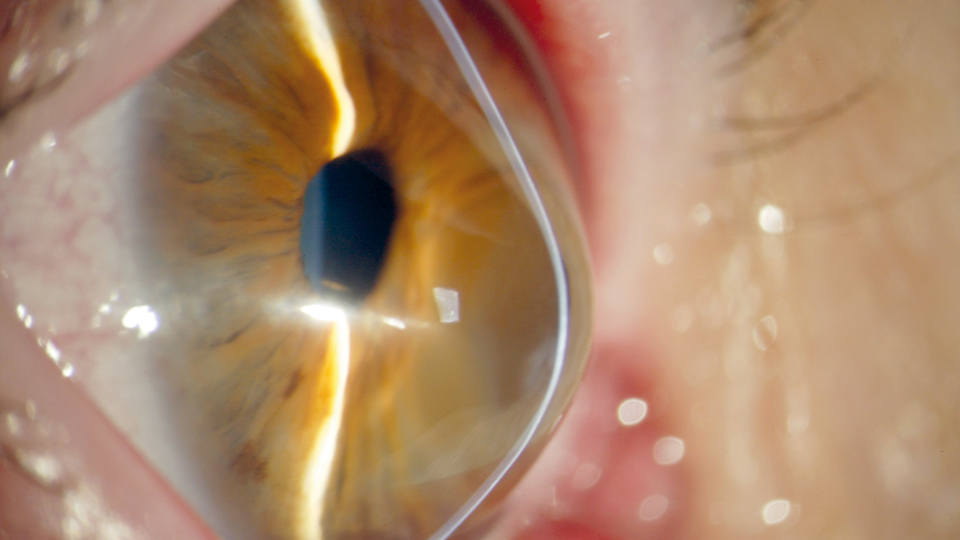
Astigmatism is a common visual problem that occurs when the cornea (the transparent layer that covers the eye) does not have a perfectly round shape. Instead of having a uniform curvature like a soccer ball, it has a shape more similar to a rugby ball, which, depending on its severity, causes blurry or distorted vision.
When this irregularity in the shape of the cornea is uniform and predictable, it is called regular astigmatism, and it is usually corrected easily with glasses or soft contact lenses. However, when the surface of the cornea presents deformities or scars that make the curvature vary unpredictably at different points, irregular astigmatism occurs. Its correction is much more complex because even with glasses it is not possible to achieve good vision, which can compromise quality of life.
It is important to consult an ophthalmologist if you have poor vision that does not improve with glasses, or a progressive increase in astigmatism. Early diagnosis can make a difference in preserving vision and quality of life.
Dr. Paola Sauvageot, ophthalmologist at the Barraquer Ophthalmology Centre